Not every caller needs the same queue
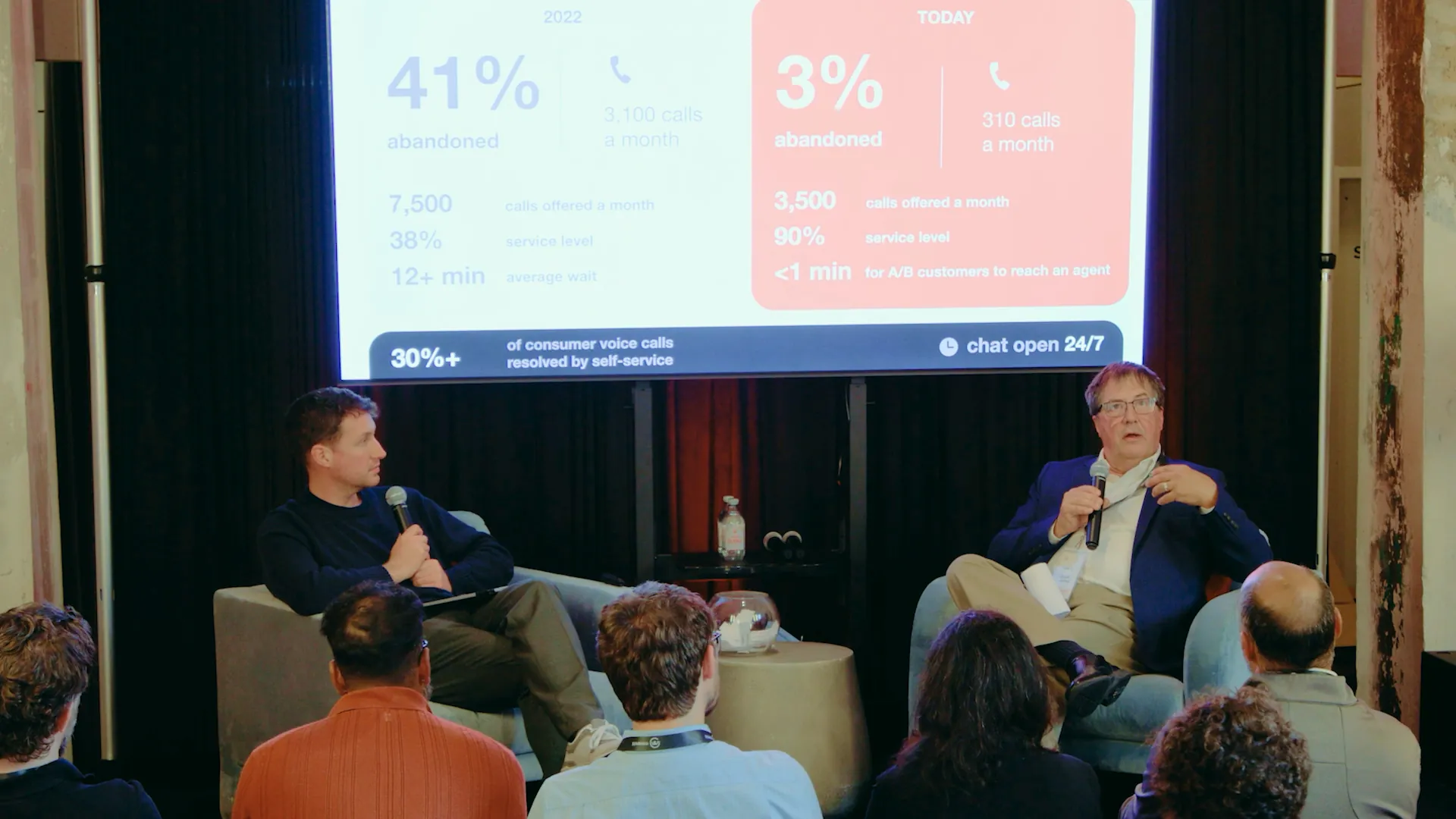
Broan-NuTone's revenue comes from contractors, dealers and distributors, while the warranty belongs to the homeowner. Both deserve service, but in 2022 everyone waited together. Now the phone system asks callers who they are. A consumer calling about a bath fan goes straight to the Mavenoid voice assistant, with an escalation path to an agent if needed. That leaves the agents free for the contractor on a job site or the servicer standing in a customer's kitchen, who now get through in about a minute.
Built in steps
It started with a self-service widget on the website, built from Salesforce data on what customers were asking about most, which also covered evenings and weekends when the phones were closed. Then came a help center at help.broan-nutone.com, reachable straight from Google, with flows that have since moved from if-then logic to generative answers drawn from Broan-NuTone's own manuals. Then voice. The morning the voice assistant went live for consumers was, in Don's words, night and day. Abandon rate dropped sharply, service level climbed into the upper 70s overnight, and customer satisfaction held.
The results
Abandon rate is 3%, against a goal of under 10%. Phone service level is 90%, up from 38%. In the voice assistant, 25 to 30% of consumer calls are resolved without an agent. Agents now get two hours a day off the phones for digital engagement and other projects, and the callers who do reach them are no longer angry from the wait.
Documentation does the heavy lifting
Don's advice from the Q&A: give the AI the real manuals. Broan-NuTone uploads its instruction manuals, spec sheets and technical service documents, and because the assistant references the same manual that shipped in the box, it repeats the same safety warnings. Anything outside that scope escalates to a live agent. Or as Don put it, he can buy scalpels on Amazon, but that does not make him a surgeon.