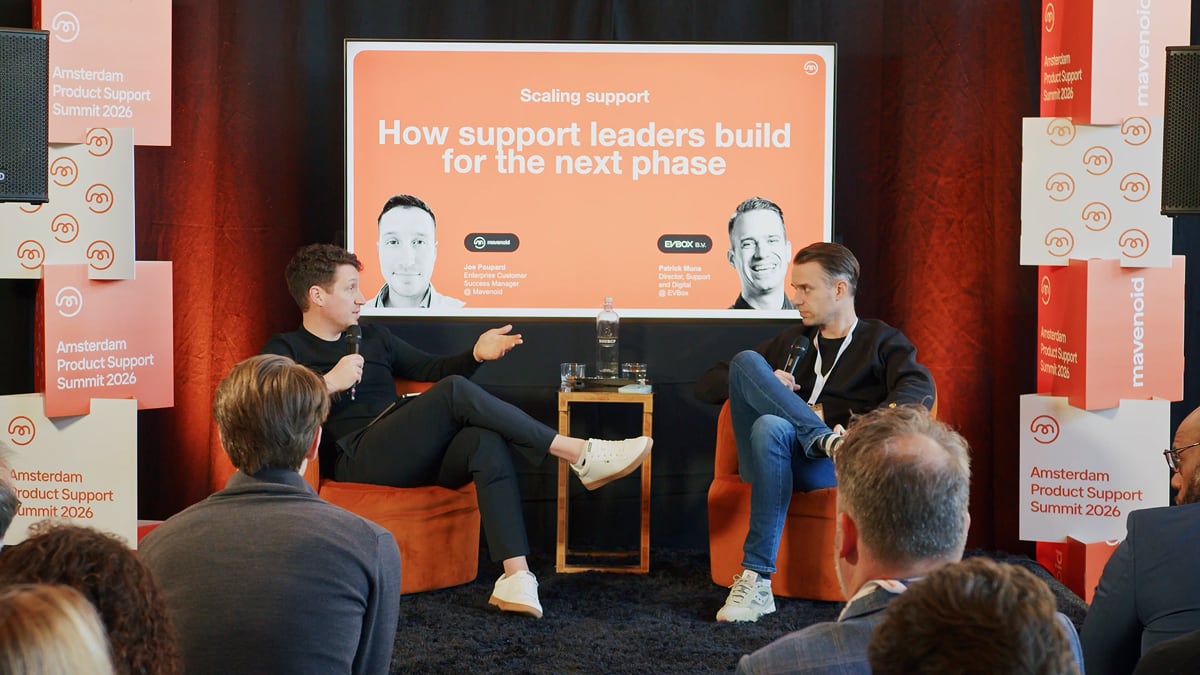
With a career spanning Netflix, travel tech, and EV infrastructure, Patrick had a clear point of view on where support is headed, and what leaders need to do now to stay ahead of it.
The headcount growth model is over
For years, the answer to more volume was more people. Patrick's view is that this equation has fundamentally changed. The opportunity now is in identifying which interactions are low complexity and low emotion, automating those, and letting the people who remain play a different role entirely.
Clean data is the prerequisite for everything
Before automation can scale, the data needs to be in order. Patrick walked through arriving at EVBox to find a CSAT score based on 25 responses out of 6,000 interactions – essentially meaningless. His approach: fix the data inputs first, connect costs to interaction volume, get it into a BI tool, and then keep a short roadmap so you actually know if anything is working.
Squeeze the lemon on what you already have
When asked where to focus for the next few months, Patrick's answer was grounded. Most teams are using 10 to 15% of the AI capability already embedded in the tools they have. That's the most immediate opportunity, before looking anywhere else.
Ownership and org structure have to come before automation
Buying AI and expecting it to solve things without restructuring around it is a mistake Patrick sees repeatedly. The ops team, the former agents validating interactions, the people deciding on tone of voice: the human infrastructure around AI matters as much as the technology itself.
Support is becoming central to the broader business
Patrick's broader argument was that the relationship between support, product, and engineering is fundamentally shifting. Support data is now informing product roadmaps in real time, and the feedback loop between customer and creator is getting shorter. Leaders who position themselves in that conversation will have outsized influence.