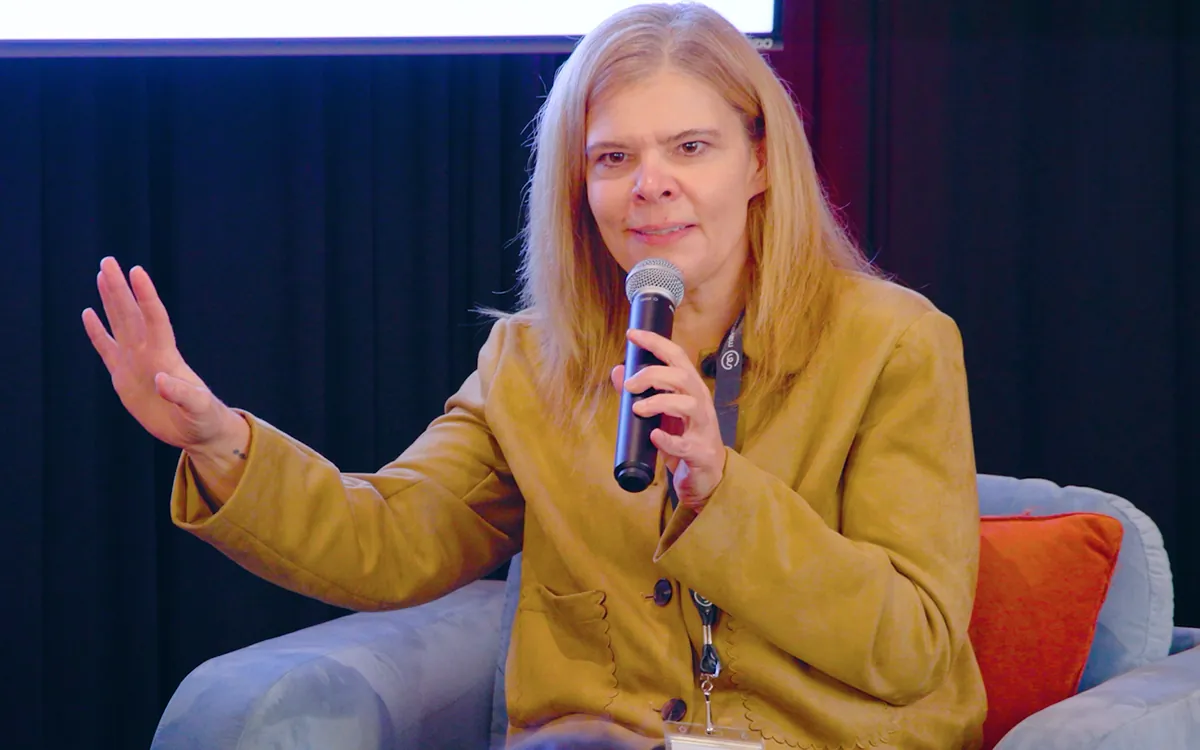
Nearly four years of building AI-powered support for a product that customers install themselves, troubleshoot themselves, and rely on to keep their homes safe gives you a particular clarity about what actually works.
Voice over text, and the data to prove it
For a DIY security company where customers are walking through sensor installations and Wi-Fi configurations in real time, text-only support falls flat. Voice, combined with multimodal elements like sending a relevant guide via SMS mid-call, changed the equation entirely. The result: self-service resolution consistently above 50% for two to three years running, without a single dip.
Single call resolution as a north star
For Frontpoint, getting it right the first time isn't just a KPI — it's existential. As Glenn put it: "If you call again, it's unlikely that we'll be able to keep you." That pressure has shaped how they design every interaction, with AI now able to put more resources in front of a customer in a single call than was ever possible before.

Stay close to the front lines
One of Glenn's sharpest observations had nothing to do with technology. The higher you climb, he argued, the further you drift from the actual customer voice and the more likely you are to miss the subtle friction points that matter most. His antidote: a rigorous feedback loop, a close eye on where customers drop off in the journey, and a genuine willingness to adjust as AI adjusts.
Hold AI to agent standards
Frontpoint's growth is built on word-of-mouth, which means customer experience is everything. That standard doesn't change because the front line is now AI. Glenn holds his AI to the same bar as an agent who has completed nearly four weeks of training, and that expectation, he argues, is what separates AI that erodes trust from AI that builds it.