Here's the thing: a brand running an AI assistant may handle thousands of conversations every week. Most teams sample a handful, eyeball them, and hope the rest are fine. But sampling misses the patterns - the recurring topics where customers struggle, the questions the assistant keeps fumbling, the moments where automation should be working but isn't.
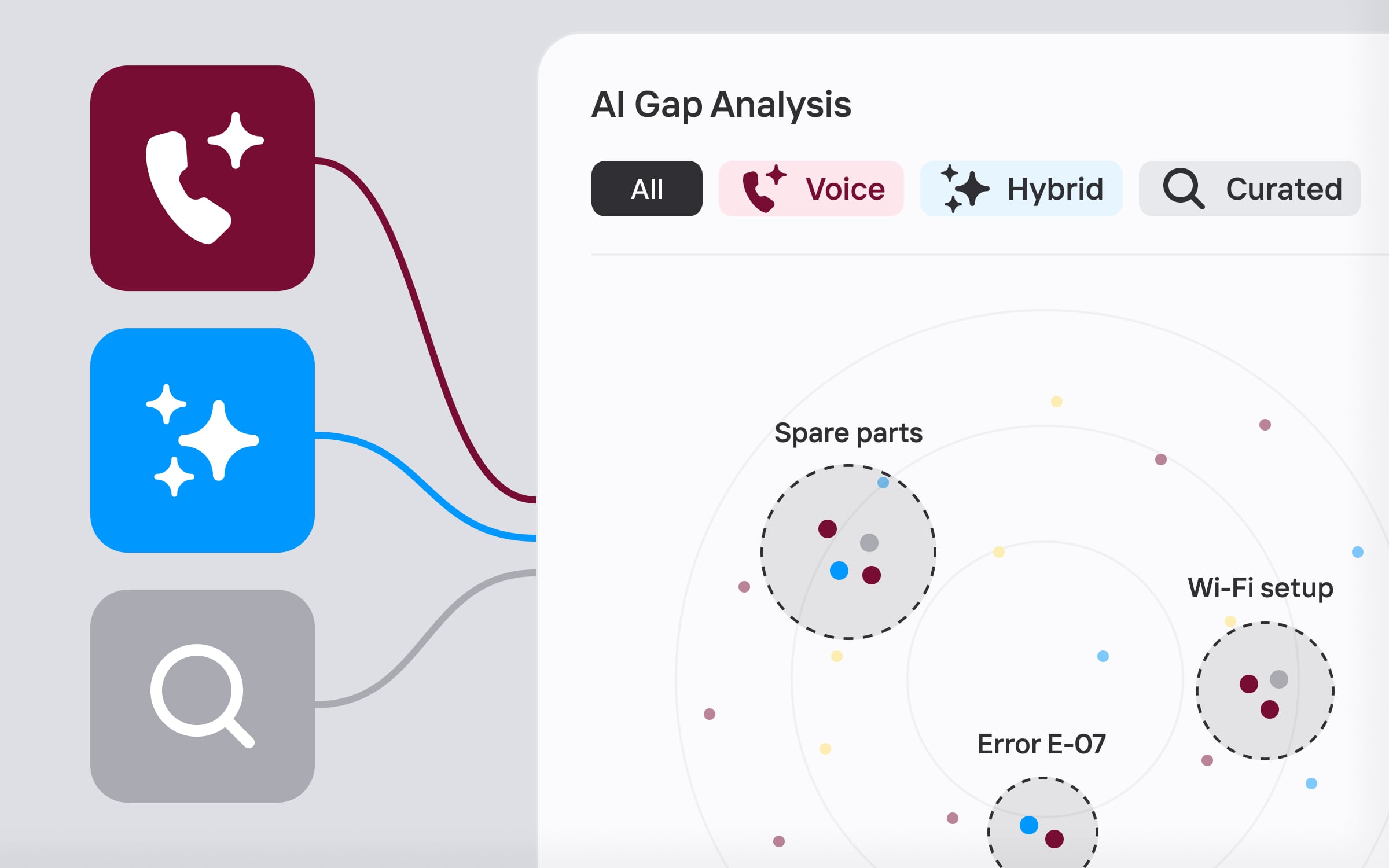
This month, we're closing that loop. AI Gap Analysis - our tool for systematically surfacing where customers struggle most - now covers all of our AI experiences: Voice Assist, Hybrid, and Generative. Whatever mix of modes you're running, you finally have one place to see exactly where to invest next.
We've also made Voice Assist meaningfully faster, more patient, and more multilingual - and given the digital assistant a much cleaner way to hand customers off to external sites.
Let's dig in!
Improved AI Gap Analysis, for all modalities
AI Gap Analysis has been one of the most-used and loved tools Mavenoid admins have for systematically improving self-service.
It surfaces the topics customers struggle with most, clusters them, and shows you exactly where to invest. Until now, though, it only worked on curated conversations.
This month, that changes. AI Gap Analysis now covers Generative, Hybrid and Voice Assist conversations alongside Curated. Topics are clustered into a single unified view, with filters to slice by mode whenever you need that lens.
We've also redefined what counts as a "gap" - bad outcomes, "not helpful" feedback, and escalations all feed into “gap” analysis. The result is a much more complete picture of where AI is falling short, regardless of how the conversation was handled.
As a nice bonus, the transcript view inside AI Gap Analysis has been upgraded to our latest design - more comprehensive yet cleaner, easier to scan and easier to act on.
Voice Assist: faster, more patient, more multilingual
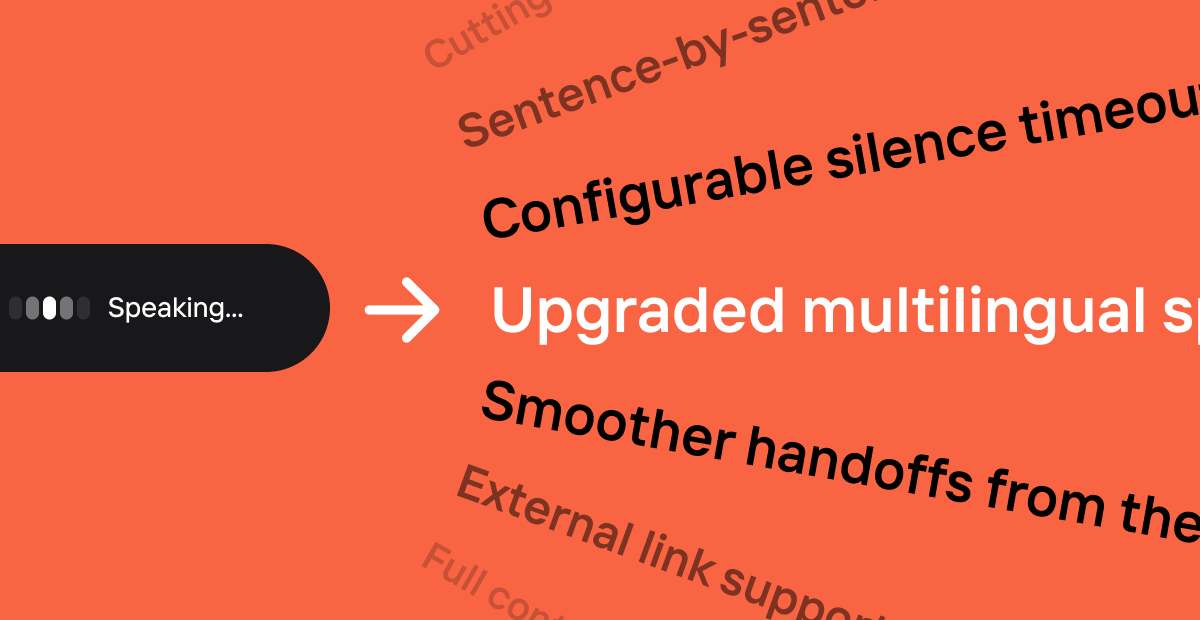
Three updates this month make Voice Assist agents noticeably better to talk to.
Sentence-by-sentence streaming
Until now, Voice Assist waited for the LLM to finish generating its full response before starting to speak. On multi-sentence answers, that sometimes meant a bit of a pause before any response came back. Now, Voice Assist speaks each sentence as soon as it's ready - cutting latency by up to 50% on complex answers. Fewer awkward silences, a much snappier back-and-forth.
Configurable silence timeouts
By default, if a caller goes quiet, Voice Assist checks in after about a minute with "are you still there?". That works for most calls - but not for cases where you actually want the caller to take their time and complete a complex process. For example: sending a form via SMS during the call and asking the caller to fill it out while staying on the line. The form might take a few minutes to complete, and the last thing you want is the assistant interrupting halfway through.
The new Silence Timeout setting lets you set exactly how long Voice Assist should wait in silence before checking in - up to 15 minutes.
Upgraded multilingual speech recognition
The speech-to-text engine we rely on for clean turn-taking and natural interruption handling - is now available in nine more languages: Spanish, French, German, Hindi, Russian, Portuguese, Japanese, Italian, and Dutch.
For brands running multilingual voice support, this is a meaningful step toward fluency of their voice support experience.
Smoother handoffs from the digital assistant
Sometimes the most helpful next step for a user lives outside the assistant - on a checkout page, a partner site, or even a video call.
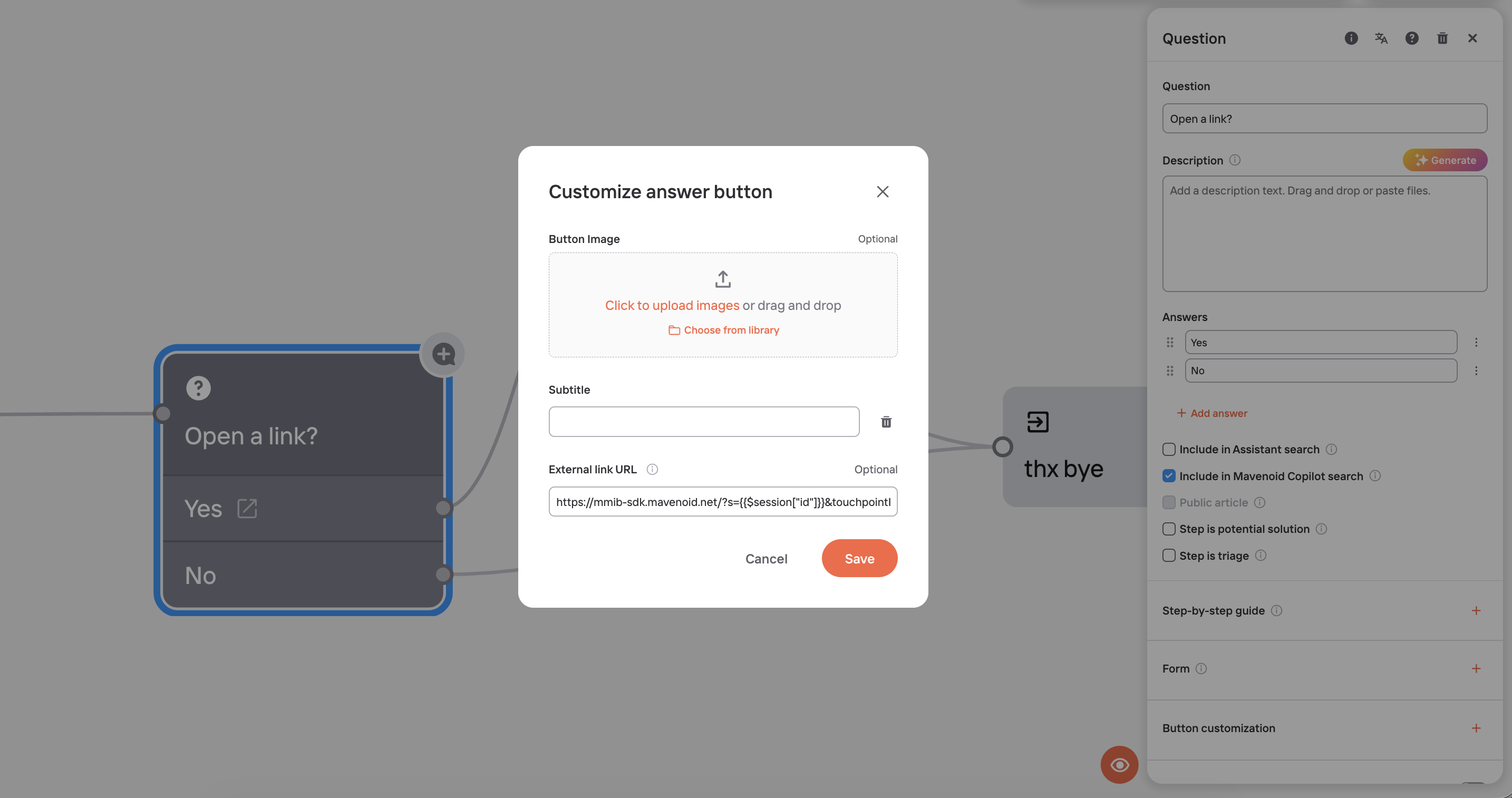
Now you can attach an external link directly to any button in Mavenoid’s curated and hybrid experiences. The link opens cleanly in a new tab -so users keep the flow open in the background while they explore. The URL also supports dynamic variables, so you can deep-link straight into the right product page, configurator, or checkout step with full user context carried over.
Small change, big difference for any flow that needs to send users somewhere else - and bring them back.
What's next
We'll keep investing in tools that help your team see what's working, what isn't, and where to focus next - AI Gap Analysis was a big step, and there's more on the way. Voice Assist and Multimodal have a packed roadmap for the coming months too, with more control over flow behaviour and tighter integration with the systems around it.
If you'd like to see any of these capabilities in action, reach out to your Mavenoid contact or request a demo.
Until next time!