If you make hardware, appliances, power tools, or any product that can malfunction, get installed wrong, or behave differently across firmware versions, you're operating in a fundamentally different context. The wrong AI platform doesn't just underperform. It gives customers bad advice, voids warranties, and creates liability.
So how do you tell the difference? We put together a buyer's guide built around five questions that surface whether a platform was genuinely designed for product support, or just retrofitted to look like it was.
1. How does your platform help customers who don't know how to describe their problem?
Most customers can't articulate what's wrong. They just know something isn't working. If a platform can only handle clean, text-based queries, it's already failing a large share of your support volume.
2. How does your platform define and deliver real resolution?
Containment and deflection aren't the same as resolution. A customer who abandons a chatbot in frustration still counts as "contained." The metric worth tracking is confirmed self-service resolution, where the customer actually got their problem fixed.
3. What happens when talking through the problem isn't enough?
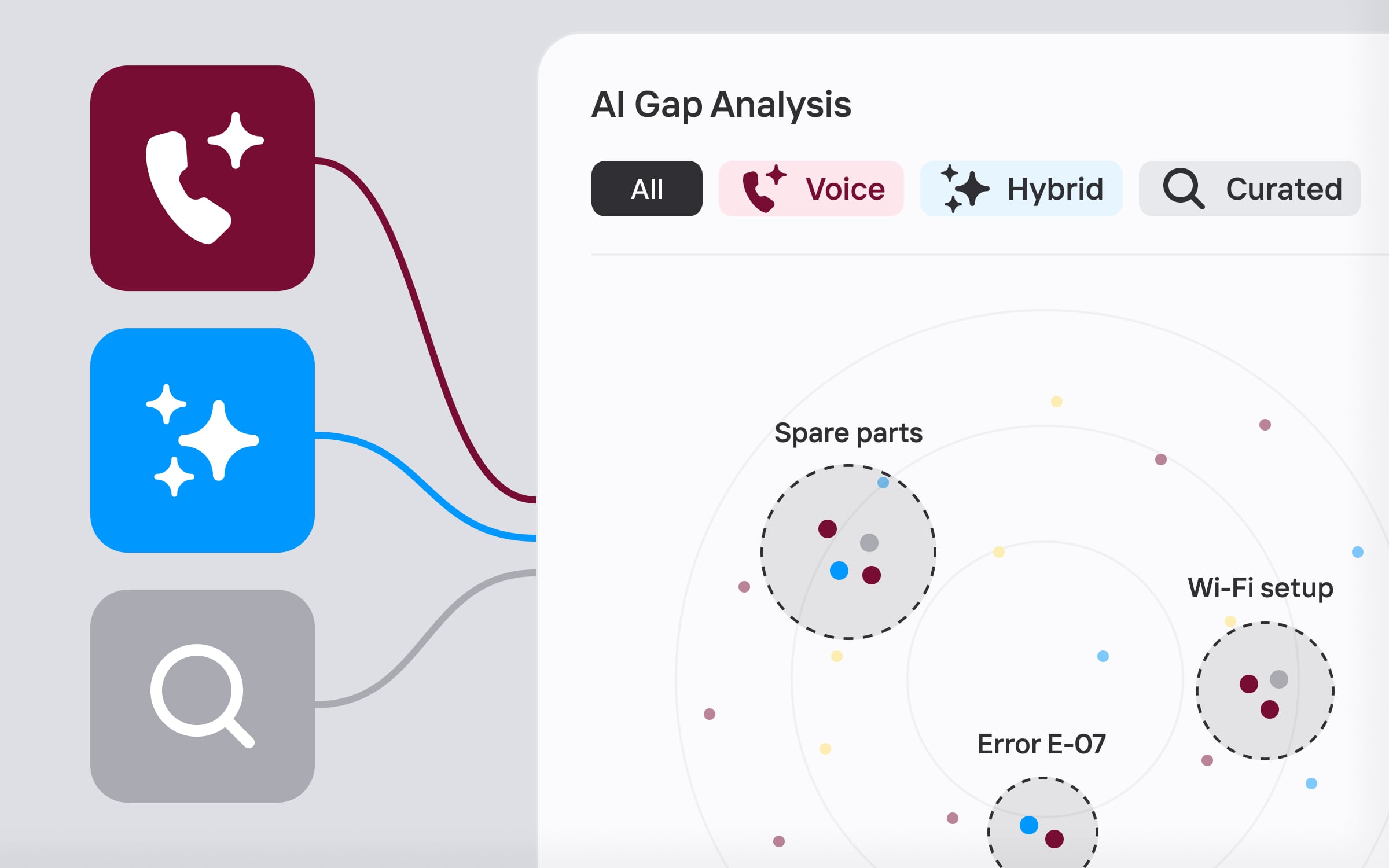
Voice AI is a growing part of the support landscape, but voice alone rarely carries the full fix on a physical product. What happens when a customer needs to see a diagram, share a photo, or escalate to a human without starting over?
4. How does your platform stay accurate on safety-critical questions?
Generative AI is right most of the time, and that's exactly what makes it dangerous when it isn't. For questions about safety, warranty, or regulatory compliance, "usually correct" isn't good enough.
5. How does your platform handle device-dependent complexity?
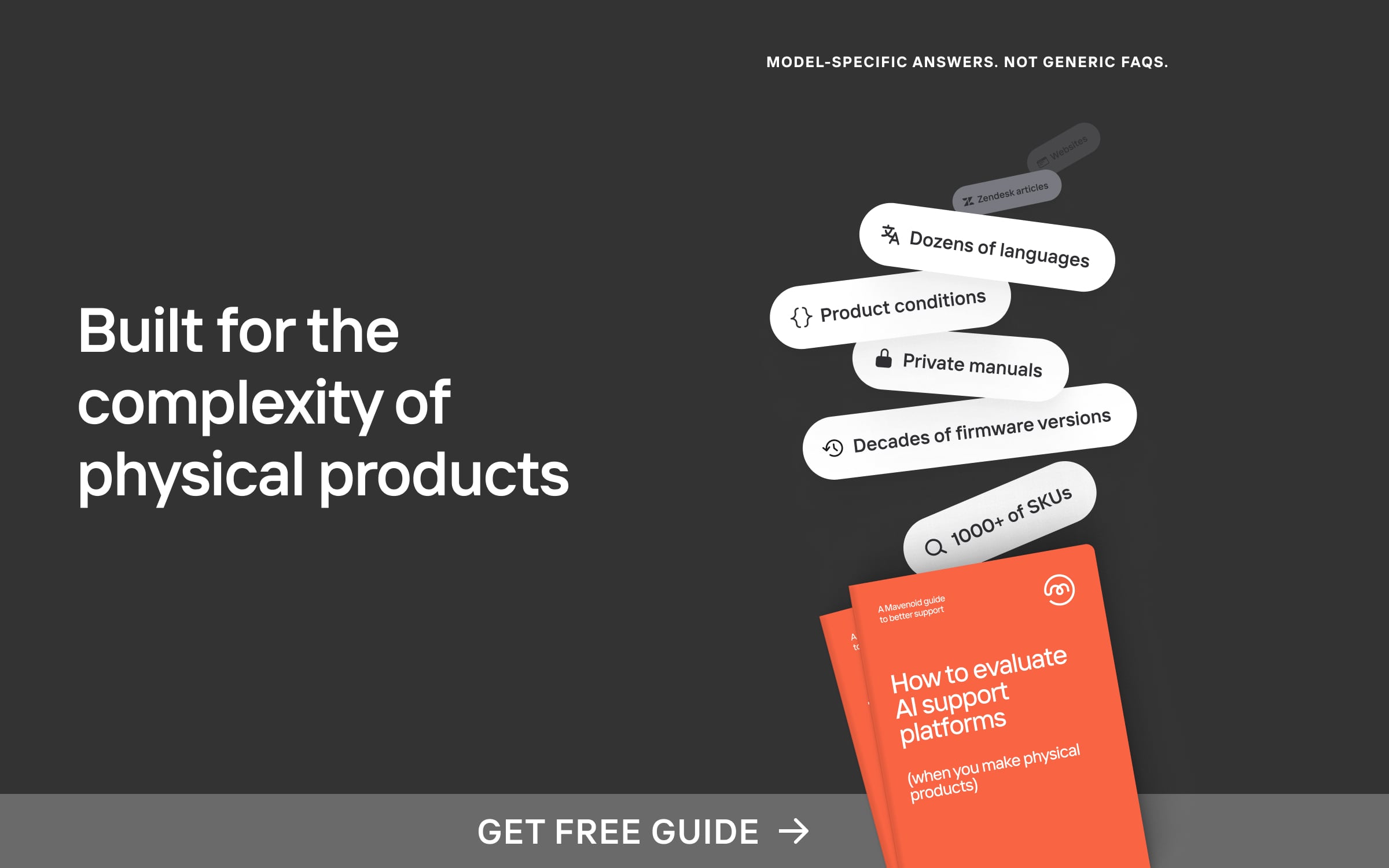
"What does this error code mean?" has a different answer for every generation of a product line. If the platform can't hold model-specific context across thousands of SKUs, it will send customers the wrong fix.
These five questions are a starting point. The full guide goes deeper on what to look for in vendor demos, and where most platforms fall short.